We all know we should move more, sleep better, eat more healthily and reduce stress. Most of us have made resolutions. And most of us have returned to square one. Why does this happen? And what makes some people change their habits for good? In the third episode of the podcast "A Plan for a Long Life", the hosts talk to a clinical psychologist about what really lies behind lasting change.
About the "A Plan for a Long Life" podcast
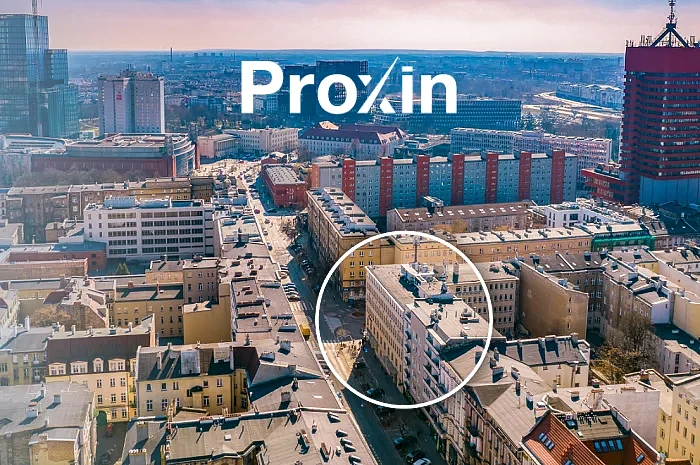
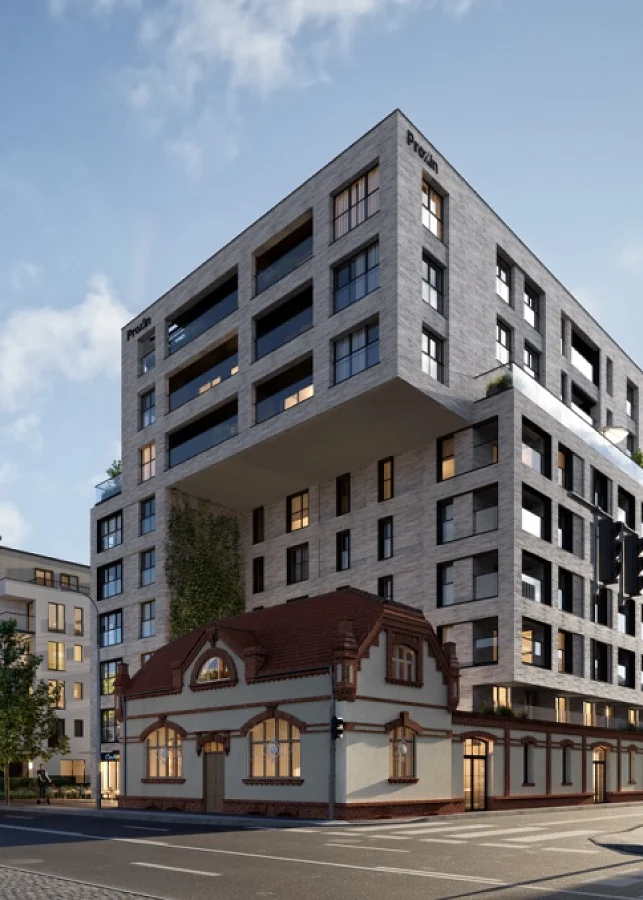
"A Plan for a Long Life" is a podcast by Proxin Development – a Poznań-based developer with over 19 years of experience, the first in Poland to build the philosophy of longevity into the DNA of its development. Proxin is a company for which a property is not just floor area and location – it is an environment in which people are meant to live better, longer and on their own terms. The podcast is hosted by Mirosław Borowicz – a lawyer, entrepreneur and investor with many years of experience in real estate projects, the creator of the Izera Park concept – and Dr Włodzimierz Kubiak – a physician, graduate of the Poznań University of Medical Sciences and an enthusiast of lifestyle medicine and longevity.
Episode 3: The psychology of change – why knowledge isn't enough to change your habits
The guest of the third episode is Anita Szajek-Żurczak – a clinical psychologist, ICC-certified coach and graduate of the University of California, Los Angeles (UCLA) – a university ranked among the top ten in the world. A native of Poznań who lived and worked in the United States, Germany and Dubai, she works in Poland today. In her junior years a tennis player representing prestigious clubs and winning sports scholarships, she now works with people on changing their habits and their way of thinking.
What is the comfort zone and why is it so hard to leave?
The conversation opens with a question almost everyone asks themselves: if I know what I should be doing, why don't I do it? Anita Szajek-Żurczak explains that the first barrier is the comfort zone – and not in the sense of laziness, but of neurology.
"The comfort zone is everything that is familiar. Our brain likes what it knows – and it doesn't distinguish whether it's good or bad. It simply likes what it already knows. That's why we have to leave that zone somewhat manually, like changing gears by hand in a car." – Anita Szajek-Żurczak, clinical psychologist
Dr Kubiak illustrates this with his own example – regular mountain biking around Poznań, which on the face of it sounds like a pleasure:
"When I talk to a lot of people, they say: 'Well, yes, because you like cycling and it's easy for you.' But often the days are awful and I really have to force myself hard to go out. The cycling itself isn't fun. What's fun is when you get back and take a shower. That stepping out – there are days I'd happily not go." – Dr Włodzimierz Kubiak
Motivation or discipline? What really works?
The hosts ask a question that troubles many: is motivation enough to change your life? Anita Szajek-Żurczak answers vividly:
"I once saw a meme: discipline leads motivation by the hand like a small child. Without discipline, motivation isn't enough. Over time it has to turn into a habit – and only then do we stop wasting energy on deciding, because it becomes automatic." – Anita Szajek-Żurczak, clinical psychologist
Goals are also key – but properly set. Not grand resolutions, but small, concrete steps with a clear sense of purpose.
"Motivation follows the goal and the meaning of the change. When we have a goal, we approach motivation completely differently. It's no longer: 'oh, it's Sunday, I see others doing it and I still haven't.' It's a direction." – Anita Szajek-Żurczak, clinical psychologist
Mirosław Borowicz gives a concrete example of a small goal:
"For example, I tell myself: on Mondays and Wednesdays I leave the car at home and take public transport. Or I park 400 metres from work and walk. These are simple things – and if I start doing them systematically, it quickly becomes a habit." – Mirosław Borowicz
Environment and people – a force we underestimate
One of the most important threads of the conversation is the influence of our surroundings on our decisions. Not only the physical surroundings – but above all the social ones.
"The environment matters enormously. Not the buildings – the people. They add meaning to life, whether we want to admit it or not. Even an introvert, if they end up in the right environment, talks until 5 a.m. and there's no introvert left in the room." – Anita Szajek-Żurczak, clinical psychologist
Mirosław Borowicz cites data that surprised him:
"I read that if we live in the vicinity of greenery, the probability of depression falls by 20%. I'm inclined to believe it. The surroundings themselves – physical and psychosocial – shape our health." – Mirosław Borowicz
Anita Szajek-Żurczak points to a trend already noticed in Scandinavia – where new neighbourhoods are designed so that people naturally interact with one another:
"In the Scandinavian countries, when new communities are created, the space is planned strategically so that people talk to one another, so that there are no blank walls left. We are written into emotional bonds in our DNA – and it is practically a requirement of health." – Anita Szajek-Żurczak, clinical psychologist
Anita Szajek-Żurczak confirms: a habit is built in around 21 days, after which the brain enters a new comfort zone and stops resisting.
"Within a week we're already on a different level. After three weeks the brain already likes it – because it has got to know it." – Anita Szajek-Żurczak, clinical psychologist
Meaning – the foundation without which nothing works
The speakers agree: knowledge without a sense of meaning is not enough. A person who is tired, lonely and overloaded with duties will not implement any change – until they find an answer to the question: what for?
"Our idea of longevity comes down to this: to live longer in good shape, you have to be self-sufficient and independent for as long as possible. I think that is a great meaning – both for someone living alone and for someone with a family. To be able to go skiing with your granddaughter. To do the shopping. Not to need the care of others." – Mirosław Borowicz
Anita Szajek-Żurczak adds that meaning is often born from outside – from relationships, not from one's own head:
"When we have a goal for someone else – that we want to feel good and look better – we do it much faster and more smoothly than when we're supposed to do it just for ourselves. We draw that motivation and energy from outside." – Anita Szajek-Żurczak, clinical psychologist
Belonging – what we all have in common
In the finale of the conversation, Anita Szajek-Żurczak points to one element which, in her view, takes precedence over knowledge, discipline and motivation:
"A sense of belonging and meaning – they go together. When I feel belonging and acceptance, meaning appears on its own. I look forward to us meeting, to something happening somewhere out there. One pulls the other along." – Anita Szajek-Żurczak, clinical psychologist
Mirosław Borowicz sums up:
"What we all have in common is the need to belong. There's no individual plan here. Everyone needs it. Belonging gives a sense of acceptance and security, and these are basic human needs, written into our DNA." – Mirosław Borowicz
Three principles from the third episode
-
Knowledge is not enough – you need discipline and habit. Motivation is fragile. Discipline, which over time turns into a habit, is the only road to lasting change. A habit is built in around 21 days.
-
Set small goals with a clear sense of purpose. Not grand resolutions, but concrete, repeatable steps – public transport on Mondays, a walk before work, giving up the weekday sweet roll. Every small goal achieved builds a sense of agency.
-
Environment and community shape habits more than willpower. Find an activity you enjoy. Find people who think similarly. A sense of belonging and meaning from relationships do more than many a diet plan.
Izera Park – a development built on the philosophy of longevity
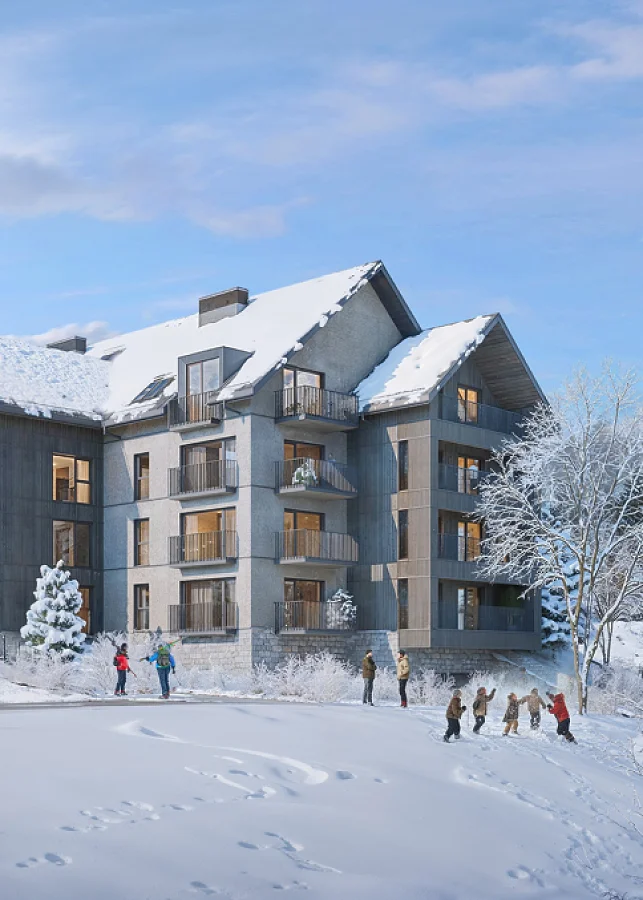
If you are hearing about Izera Park for the first time, it is a development with no equivalent in Poland.
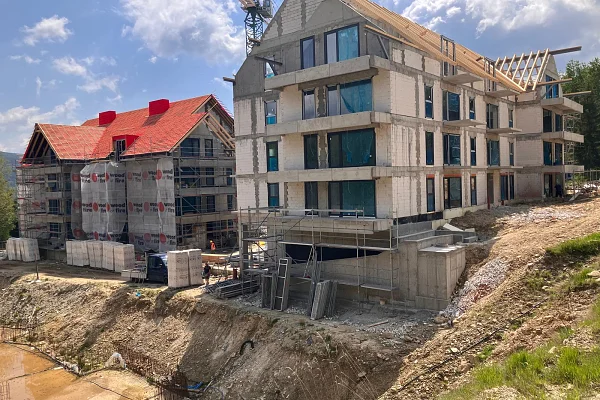
Izera Park is being built in Świeradów-Zdrój, in the heart of the Izera Mountains – a spa town with over 250 years of health tradition, famous for its radon waters and exceptional microclimate. It is a place that heals in itself: the air, the quiet, the forest and the rhythm of mountain life do their work – even before you open the door of your apartment.
The development consists of 70 apartments in two intimate buildings, with varied floor areas suited both to personal use and to renting. Each apartment is full ownership – with no hotel restrictions and no obligation to rent. You use it when you want. You rent it if you want. You decide.
What sets Izera Park apart from the competition is not a single detail – it is a whole ecosystem designed with health and longevity in mind:
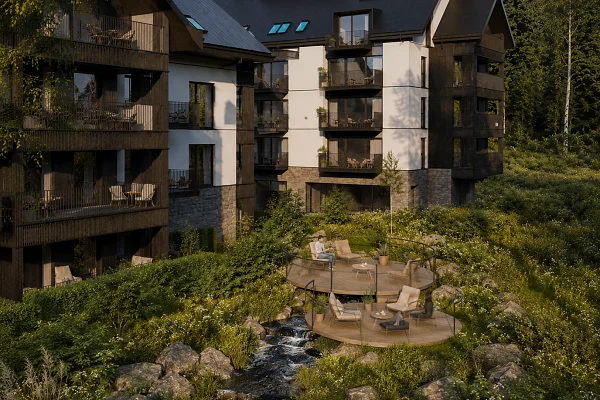
- A façade of natural board charred using the Japanese Yakisugi (Shou Sugi Ban) method – a centuries-old technique that gives the buildings a unique dark character and lets the architecture blend into the forest surroundings rather than compete with them.
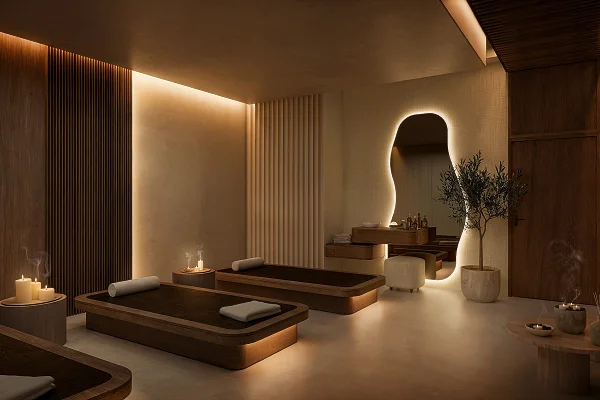
- Izera Longevity Center – a dedicated service unit on the development's grounds, housing a Longevity Centre studio. Izera Park residents have priority access to it. It is a place to work on yourself: yoga, training and health workshops – all in the philosophy of lifestyle medicine the podcast hosts talk about.
- Ganbanyoku saunas – Japanese infrared saunas with a stone plate, working in a completely different way from a traditional Finnish sauna. They deeply warm the body from within, supporting regeneration and detoxification – without extreme temperatures.
- A yoga room – a space for daily practice, available to residents as part of the infrastructure, not as a separately charged extra.
- A natural stream on the development's grounds – something you won't find in any aparthotel in the area. Water, sound and the closeness of nature right outside the window. Not as decoration – as a genuine space for regeneration.
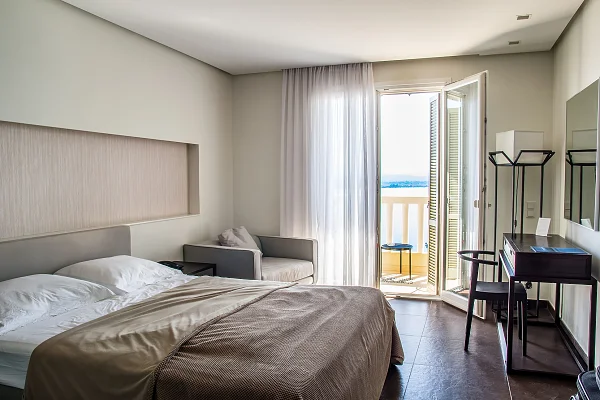
All apartments are designed with a view of the Izera Mountains. The gondola lift is 500 metres from the development.
Izera Park is not another aparthotel geared towards guest turnover. It is an intimate place for people who understand that the environment of everyday life – clean air, nature, community and calm – is just as important as diet and movement.
Get in touch with the Proxin team: sprzedaz@proxin.pl / +48 603 711 805 / izerapark.pl
Listen to the third episode of the podcast "A Plan For A Long Life"
Watch the episode: youtu.be/N55HNq1LfDc