The Japanese rock sauna Ganbanyoku is one of the oldest and most effective thermotherapy methods in the world – and still a rarity in Poland. The heat emitted by the warmed volcanic plates penetrates 3–5 cm into the body, triggering regeneration processes you won't achieve in any other sauna. What exactly is the Ganbanyoku sauna, how does it work, how long does a session last and are there any contraindications? We answer every question.
The Ganbanyoku sauna – what it is and where it comes from
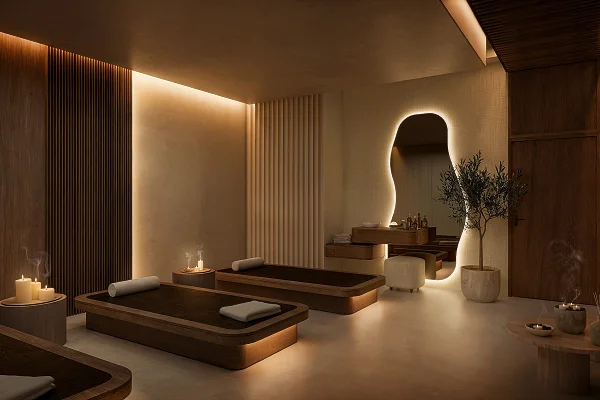
Ganbanyoku (岩盤浴) is a Japanese rock bath – practised in Japan for over 1,000 years. Legend has it that Japanese warriors observed that monkeys basking on warm volcanic rocks were calmer, healthier and stronger. They began to imitate this habit, and over time it became a lasting element of Japanese health culture. Today most Japanese people use a rock bath at least once a week. The modern Ganbanyoku sauna is a precisely designed station with plates of black volcanic silica (Black Silica) – a rock mined in only one place in the world: the Hiyama mountains on the Japanese island of Hokkaido. The plates are heated to a comfortable 40–42°C and emit far-infrared radiation (FIR – Far Infrared Rays) and negative ions, commonly called "air vitamins." During a session you lie on the warm stone – in comfortable sportswear or wrapped in a towel – and let the heat do its work.
How the rock sauna works – FIR radiation and negative ions
The mechanism behind Ganbanyoku rests on two physical phenomena: far-infrared radiation and the emission of negative ions.
FIR radiation penetrates deep into the tissues, activating numerous processes at the cellular level – it dilates blood vessels, boosts circulation, accelerates metabolism and stimulates the body's natural cleansing processes. The capillaries that carry metabolic by-products away from cells work more intensively, the skin is cleared of dead epidermis, smooths out and takes on a glow.
Negative ions emitted by the heated black silica act on the nervous system. Research indicates they help balance the autonomic nervous system, reduce stress and bring the body into a state of deep relaxation. In 2008, researchers from the Hamamatsu University School of Medicine conducted a study on 68 women who regularly used Ganbanyoku and observed a significant improvement in mood before and after sessions.
Particularly important: studies have shown that the sweat secreted during a Ganbanyoku session contains just 80–85% water – the rest is cholesterol, fat-soluble toxins, sulphuric acid, sodium, ammonia and uric acid. By comparison, sweat in a traditional Finnish sauna is 95–97% water. Ganbanyoku therefore leads to far deeper detoxification at the cellular level.
The Ganbanyoku sauna versus the Finnish sauna – how do they differ?
This is the question most people ask when they hear about Ganbanyoku for the first time. The differences are fundamental. In a traditional Finnish sauna the air temperature reaches 80–100°C. The body is subjected to intense heat swings, the heart races and breathing becomes laboured. For many people – especially the elderly or those with hypertension or cardiac problems – this experience is too demanding.
The Ganbanyoku rock sauna works in a completely different way. The plate temperature is 40–42°C and the air temperature in the room stays close to room temperature. The heat from the stone penetrates 3–5 cm into the body, reaching the tissues and organs directly – without overloading the circulatory system. You won't feel the kind of heat that makes breathing difficult here. Many people fall asleep during a session, surprised to wake up drenched in sweat despite such pleasant, soothing warmth.
There is also a difference in the composition of the sweat and the depth of detoxification – as described above. According to wellness specialists, Ganbanyoku is 6–7 times more effective than traditional saunas at removing heavy metals and toxins from the body. The Ganbanyoku rock sauna is also considered one of the five most interesting holistic-medicine treatments in the world by Wellness & Spa specialists.
The health benefits of the Ganbanyoku sauna
Regular sessions in the Japanese rock sauna translate into a range of documented health benefits:
- deep detoxification of the body from heavy metals, mercury, aluminium, nicotine and sulphuric acid,
- improved blood circulation and tissue oxygenation,
- accelerated metabolism and support for weight loss – during a single 60-minute session you burn from 800 to 1,200 calories,
- strengthened immune system through stimulated production of leukocytes and lymphocytes,
- reduced stress and muscle tension and improved sleep quality,
- analgesic and anti-inflammatory effects – recommended for back and joint pain, rheumatism and arthritis,
- skin regeneration and rejuvenation: smoothing of wrinkles, reduction of cellulite, support in treating acne, eczema and psoriasis,
- an antidepressant effect through the regulation of serotonin levels by negative ions.
After a session the sweat absorbed by the skin acts like a natural balm: Japanese doctors call it "pearl sweat" – odourless, with strong antibacterial properties, forming a hydro-lipid film on the skin that gives it softness and elasticity.
How does a Ganbanyoku session go?
A Ganbanyoku session should last from 45 to 90 minutes. You lie directly on the warmed rock plate or on a towel, resting your head on a special Japanese pillow.
During the session it's worth staying hydrated, changing your position every quarter of an hour and, above all, allowing yourself to fully relax – you can listen to music, meditate or simply drift off.
Important: for several hours after a session, taking a shower is not recommended. The sweat absorbed by the skin acts like a natural moisturising balm – a shower straight after the treatment would cancel out this effect.
How often should you use Ganbanyoku?
To achieve a lasting therapeutic effect, specialists recommend a minimum of 5 initial sessions within a relatively short time. The first noticeable effects – better skin, deeper sleep, reduced tension – appear precisely after this point. To maintain wellbeing, the optimal frequency is at least one session per week.
Contraindications to the Ganbanyoku sauna
Ganbanyoku is a gentle therapy accessible to a wide range of people – including many who cannot tolerate a traditional sauna. There are, however, contraindications you need to be aware of. The Ganbanyoku sauna should not be used by people who have recently suffered a heart attack or stroke, or who are dealing with coronary artery disease, circulatory failure, atherosclerosis, thrombosis or varicose veins. It is not recommended for pregnant women, children under 12, people with high blood pressure, or in cases of fever, a cold or flu. In case of any doubt, consulting a doctor before the first session is always the right step.
Ganbanyoku in Poland – still a rarity, but not for long
In Japan, Ganbanyoku is widespread – in Tokyo alone you'll find hundreds of venues offering the rock bath, from spa centres to on-site regeneration zones for employees. Around the world – in Singapore, Australia, the USA and South Korea – the Japanese rock sauna is rapidly gaining the status of a leading wellness treatment.
In Poland it is still a niche. Ganbanyoku stations can be found in a few spa centres and sanatoriums, but in residential developments they are exceptional. The global wellness real estate market is valued at USD 548 billion and is growing faster than the entire construction sector.
According to the Global Wellness Institute, wellness amenities in real estate have expanded well beyond gyms and pools – today they include solutions that promote regeneration, contact with nature and sleep quality. Ganbanyoku, as a technology combining all these functions, is the natural next step, and it can be expected to appear in further premium developments in Poland over the coming years.
Why the Ganbanyoku sauna found its place at Izera Park
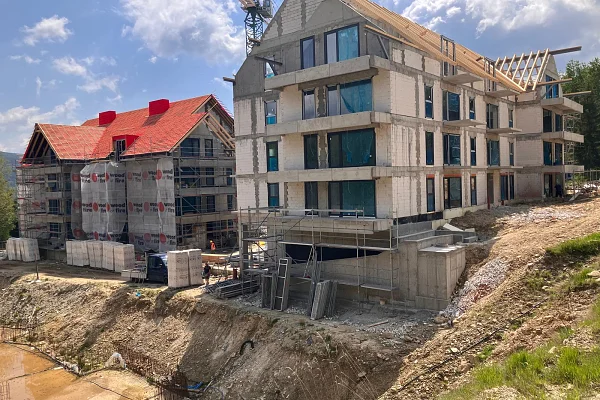
When we were designing the shared areas of Izera Park in Świeradów-Zdrój, we weren't looking for features that look luxurious in a render. We were looking for solutions that genuinely act on body and mind and that are consistent with the longevity philosophy on which the whole project is built.
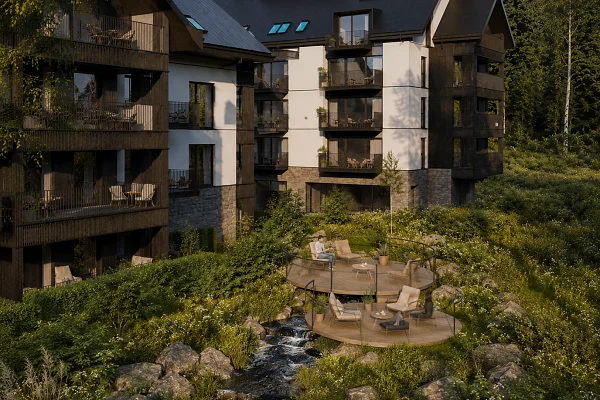
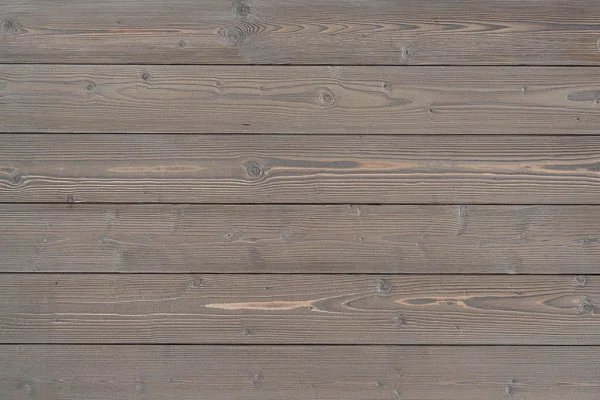
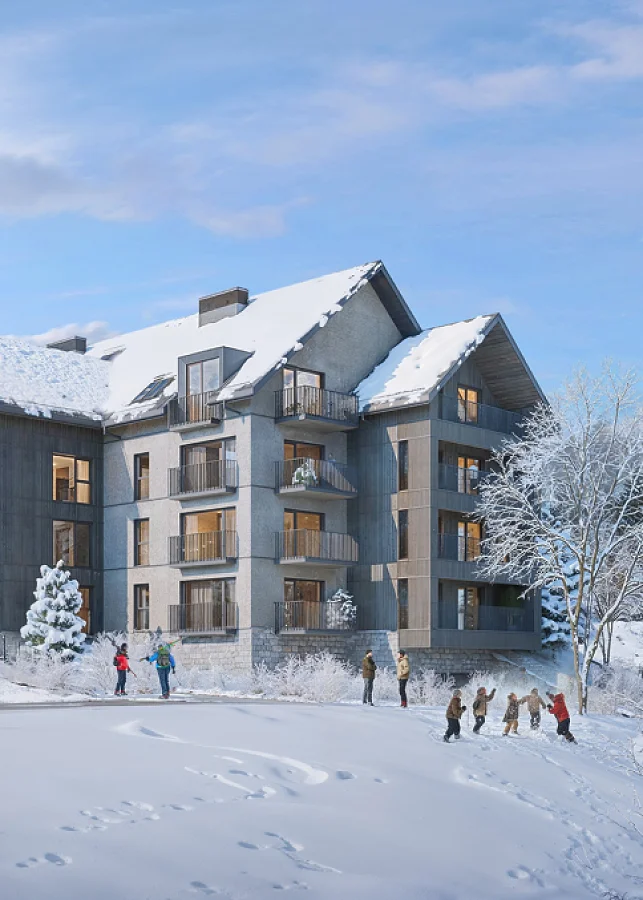
Izera Park is built around the idea of a long, healthy and active life. Not as a slogan, but as a concrete architecture of everyday life: a location in a natural environment with a therapeutic radon microclimate, a façade of wood charred using the Japanese Yakisugi (Shou Sugi Ban) method, a natural stream on the development's grounds, a yoga room, and the Longevity Studio with access to diagnostics and health specialists.
Ganbanyoku fits this logic perfectly. It is a regeneration technology that requires no effort – it requires stopping. Lying down. Breathing. Allowing the body a deep cleansing and a quieting of the mind. In an era when one of the hardest skills to master has become the ability to do nothing, the rock sauna is a tool for that art.
There is also coherence on an aesthetic and cultural level: Yakisugi – the Japanese wood-charring technique – and Ganbanyoku – the Japanese rock sauna – come from the same culture and the same philosophy: that nature, patience and simplicity are the most effective tools of a long life. The dark wood of the façade and the dark volcanic stone of the rock stations are materials with shared DNA. Izera Park is a place that invites you to slow down – and every one of its elements reinforces that narrative.
The Ganbanyoku sauna at Izera Park is available to apartment owners as a permanent element of the shared-area infrastructure.
Frequently asked questions about the Ganbanyoku sauna
How long does a Ganbanyoku session last?
A standard session lasts from 45 to 90 minutes. First-time users are advised to start with 45 minutes and gradually extend the time of subsequent sessions.
How often should you use the Ganbanyoku sauna?
For a therapeutic effect, at least one session per week is recommended. The first lasting effects appear after about 5 regular sessions.
How does the Ganbanyoku sauna differ from a Finnish sauna?
The main differences are temperature (40–42°C vs 80–100°C), the depth at which the heat acts (3–5 cm into the tissues vs the skin's surface) and the composition of the sweat secreted – in Ganbanyoku the sweat contains considerably more toxins and heavy metals than in a traditional sauna.
Does the Ganbanyoku sauna have contraindications?
Yes. It is not recommended for people who have had a heart attack or stroke, or who have coronary artery disease, circulatory failure, varicose veins or thrombosis, for pregnant women or for children under 12. In case of doubt, consult a doctor.
Can you take a shower after a Ganbanyoku session?
It is recommended to wait several hours after a session before showering. The sweat absorbed by the skin acts like a natural moisturising balm, and it's worth letting it work.
Where can you use a Ganbanyoku sauna in Poland?
Ganbanyoku saunas are available in selected spa centres and sanatoriums across Poland. One of the few places where the Ganbanyoku sauna is a permanent part of the infrastructure for residents is Izera Park in Świeradów-Zdrój.
Get in touch with the Proxin team: sprzedaz@proxin.pl / +48 603 711 805 / izerapark.pl