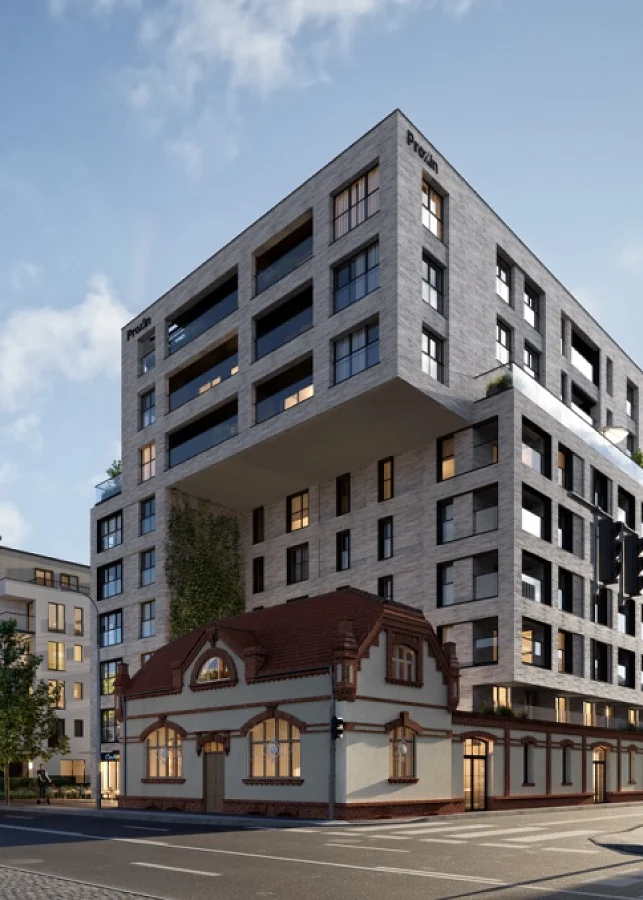
Wellness real estate is a segment of the property market in which the health and wellbeing of residents are built into the project from the very start. Architecture, building materials, access to nature and the quality of the air inside the building become just as important as a home's location or floor area. In recent years this direction has grown in significance. Global investment in wellness real estate could reach as much as USD 8 trillion by 2030. More and more investors are noticing that health-oriented properties not only improve quality of life but also increase a project's market value.
What is wellness real estate and where did the trend come from?
Wellness real estate is an approach to designing buildings and neighbourhoods in which the health and wellbeing of residents become one of the most important points of reference. Architects and designers take into account not only the aesthetics and functionality of a space, but also elements such as indoor air quality, access to natural light, acoustic comfort and the use of non-toxic materials.
The trend emerged at the intersection of two dynamically developing areas: the real estate market and the wellness industry. According to data from the Global Wellness Institute, wellness real estate is currently one of the fastest-growing segments of the global wellbeing industry.
The popularity of this approach was strongly influenced by the COVID-19 pandemic, which drew attention to the importance of the environment in which we live. It is increasingly emphasised that a poorly built environment has an enormous, and often negative, impact on health and wellbeing.
Companies are starting to adopt a wellness strategy too
The idea of wellness is not limited to residential spaces. It is increasingly being implemented by companies as well – as many as 74% of corporations worldwide have introduced programmes supporting employee health and wellbeing. The global corporate wellness market is today worth around USD 40 billion and continues to grow rapidly.
Businesses recognise that employee health translates into work performance. What's more, as many as 80% of people declare that a company's health offering influences their decision to stay with the organisation.
That is why modern office buildings are seeing solutions that support the balance between work and regeneration – relaxation zones, ergonomic workstations, spaces for physical activity and healthy, organic meals in company canteens. This approach shows that a wellness strategy can be successfully delivered in the workplace as well as in residential space.
Minimalist aesthetics and nature-inspired design
Design is also of great importance in wellness real estate projects. It is often a minimalist aesthetic based on simplicity, natural materials and muted colours.
Large glazing, natural daylight and contact with greenery are elements that not only improve the look of an interior but also affect residents' health. Studies show that biophilic design – the integration of architecture with nature – can lower stress levels by as much as 30%.
Health prevention in architecture
One of the most important elements of health-oriented properties is preventive health. This is about architectural solutions that help maintain health before any problems with it arise.
In practice, these may include:
- attractive staircases that encourage movement,
- fitness zones and gyms available to residents,
- shared spaces that counteract social isolation, which is fundamental to mental health,
- appropriate lighting that supports the circadian rhythm.
Research shows that architecture which encourages physical activity can reduce the risk of chronic diseases by as much as 35%. Appropriate lighting and acoustics, in turn, improve sleep quality and concentration. For this reason, more and more residential projects include solutions that, just a few years ago, were found mainly in wellness hotels or health resorts.
Health-oriented properties as the future of the real estate market
Health-oriented properties are gaining importance as one of the key directions in the development of the contemporary housing market. Projects of this kind respond to changing social needs and the growing interest in a healthy lifestyle.
One of the factors behind this trend is society's greater health awareness. More and more people pay attention not only to the floor area or location of a home, but also to the quality of the space in which they spend a significant part of the day. The rise of remote work is also important – since we spend more time at home, the need for comfortable and well-designed surroundings grows. In addition, an ageing society means that architectural accessibility and ease of use are becoming increasingly important.
Interestingly, market analyses indicate that wellness-type projects can achieve prices up to 10–25% higher than standard developments.
Wellness real estate in Poland
In Poland the wellness real estate segment is only just developing, yet interest in this type of investment is clearly growing.
The most developed area is investment in spa towns such as Krynica-Zdrój and Świeradów-Zdrój. In such locations, a long-standing spa tradition naturally combines with modern concepts of wellness and regeneration.
Elements of this approach are also beginning to appear in new residential developments in large cities. Projects increasingly include green courtyards, recreational spaces, access to nature and systems that improve indoor air quality.
At the same time, wellness retreats in the mountains and in rural areas are growing in popularity. Such places combine tourism with regeneration, offering space for rest, contact with nature and practices that support a healthy lifestyle.
What wellness real estate looks like in practice – the example of a Proxin Development
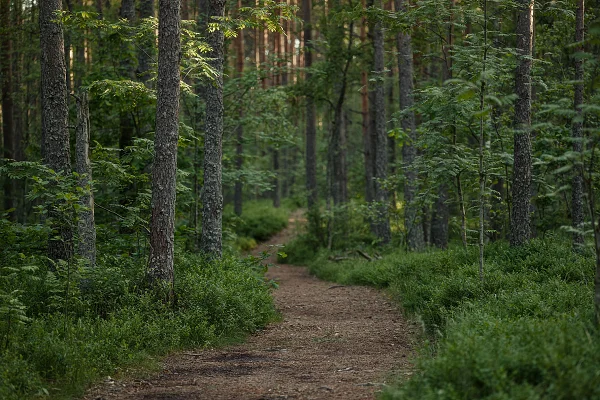
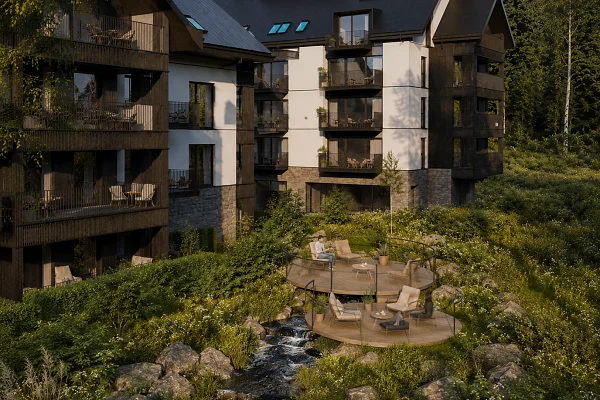
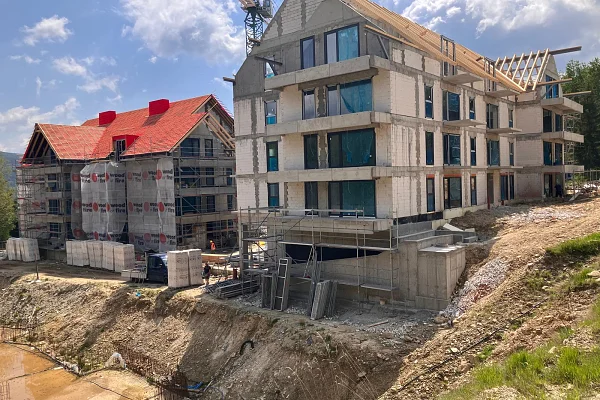
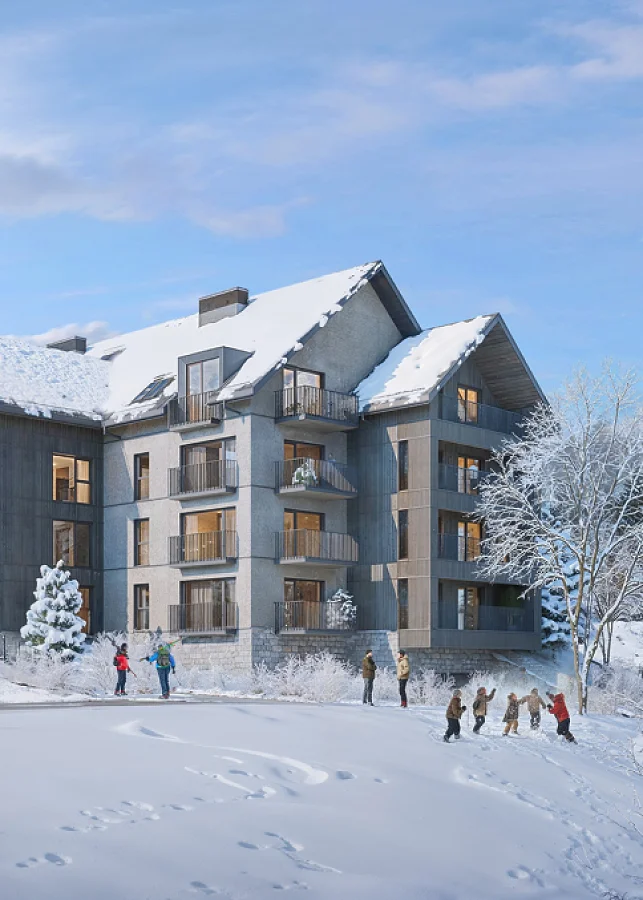
The wellness philosophy is appearing in modern residential projects. One example is the Izera Park development in Świeradów-Zdrój, which is being built amid spruce forests and the Izera Mountains.
The project makes use of the natural assets of its location and aligns with the philosophy of longevity. Contact with nature, a calmer pace of life and the opportunity for physical activity in the mountains all help to reduce stress and improve wellbeing.
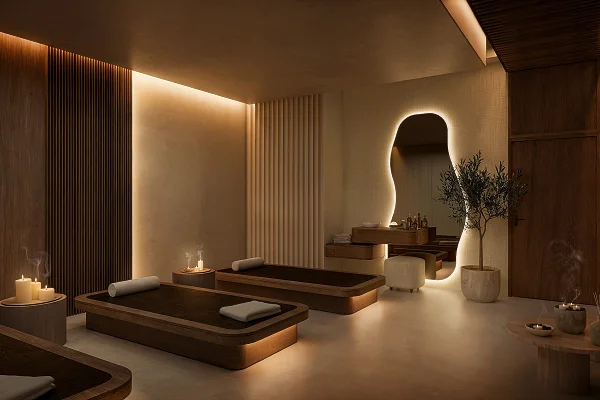
In designing the development, attention was paid to elements such as natural materials, space for regeneration and solutions that encourage residents' activity. The result is a place that is not a typical investment aparthotel, but a space for living and regular rest.
The dynamic growth of the health-oriented sector shows that investing in apartments built around wellbeing is currently one of the safest and most profitable directions. An investment in Izera Park apartments fits this global trend perfectly, offering a wellness real estate standard in the heart of Poland's spa towns. If you are looking for investment apartments in the mountains that attract premium clients willing to pay more for air quality, biophilic design and regeneration, take a look at the details of our offer. It is a strategic choice for investors who want to stay ahead of the market and bet on the properties of the future.
This approach stems from the experience of the Proxin team, which has spent years designing properties with the functionality, comfort and quality of life of residents in mind.
If you would like to see what a project inspired by the idea of wellness and the philosophy of longevity looks like in practice, visit the Proxin sales office and talk to our team about the details of the development. This will give you a better understanding of how contemporary architecture can support health, regeneration and everyday comfort.
Get in touch with the Proxin team: sprzedaz@proxin.pl / +48 603 711 805 / izerapark.pl
.